Project Benchmark · Wellness Real Estate
Wellness Doesn't Stop at the Spa
Why 619 Brickell Is an Important Benchmark for the Next Generation of Branded Residences
Beatrix Nagy
International Wellness Real Estate Advisor
· Approximately 10 min read
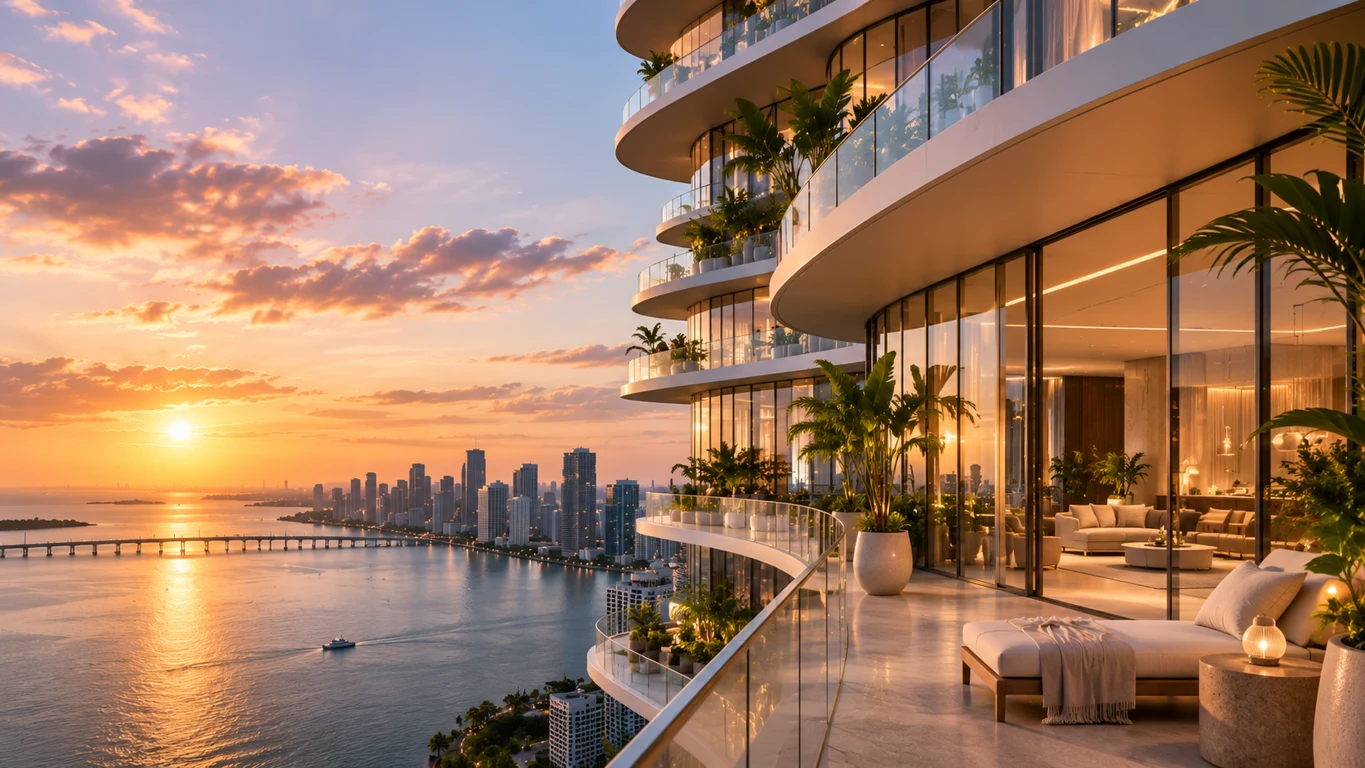
Editorial analysis based on currently published pre-construction materials. AI-generated visuals on this page are conceptual illustrations and are not official 619 Brickell renderings. Beatrix Nagy is not affiliated with 619 Brickell, Nobu Hospitality, Foster + Partners or the project development and sales teams.
I first noticed 619 Brickell because of one number:
$25 million. That is the planned investment behind the wellness and longevity offering at the new Nobu-branded residential tower in Miami.[1] In a luxury real estate market where almost every new development now has a gym, spa, sauna or recovery area, $25 million certainly gets your attention. But it wasn't actually the number that interested me most. I wanted to know what happens when the resident leaves the wellness centre. What happens upstairs, inside the private home? Because this is where I believe the difference between wellness amenities and wellness real estate becomes much clearer.
And this is also where 619 Brickell became much more interesting to me.
$25M
Planned longevity centre
Part of the proposed resident wellness ecosystem at 619 Brickell.
Source: 619 Brickell official project materials [1]
01 · 619 Brickell
The $25 million headline is only the beginning
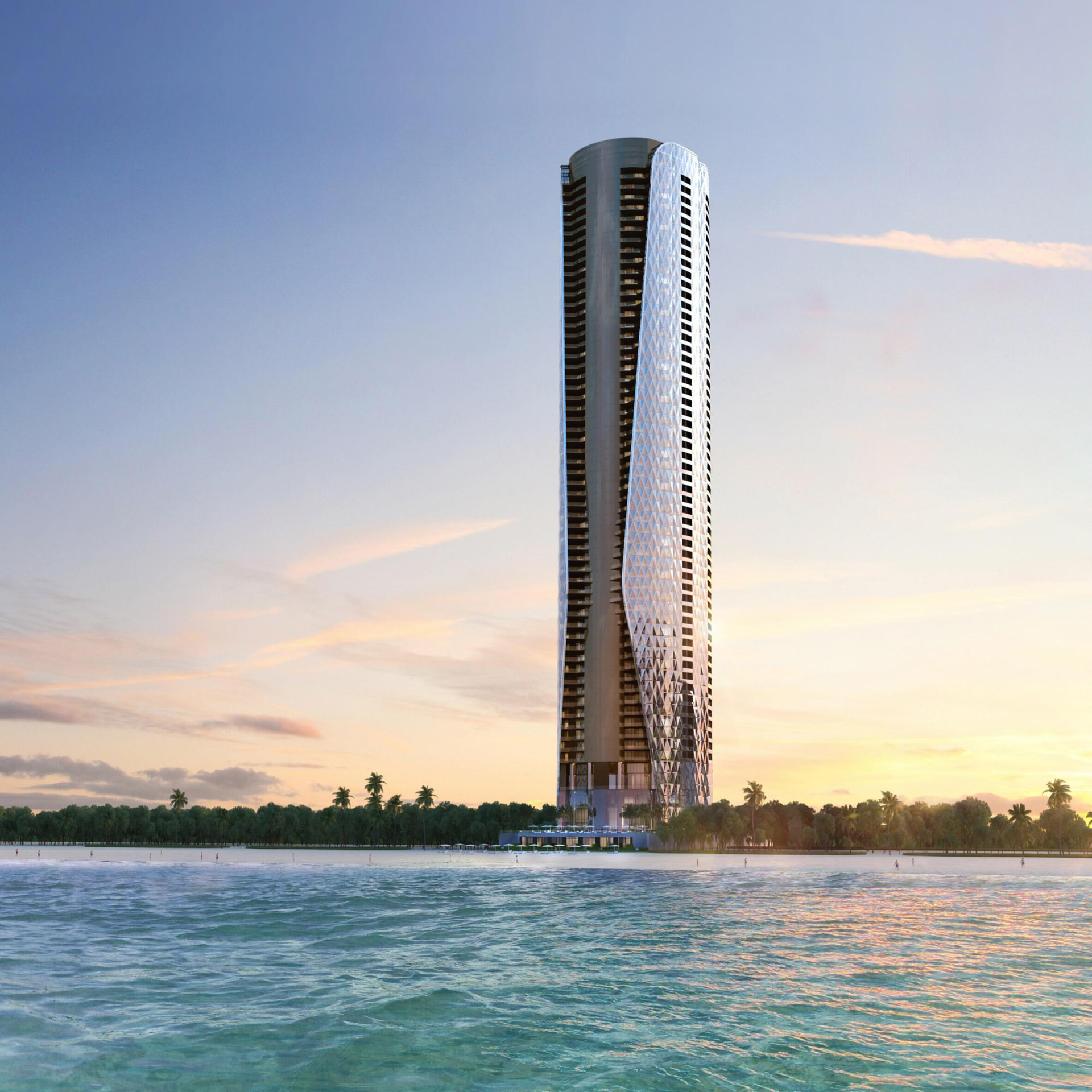
619 Brickell is a planned 75-storey waterfront residential tower in Miami designed by Foster + Partners, in collaboration with Sieger Suarez Architects, with Nobu bringing its hospitality brand and service philosophy to the project.[3][4] The current official project FAQ lists 296 residences across five residential collections, with closings expected to begin in 2031. The building will include more than 90,000 square feet of indoor and outdoor amenity space.[1][2] At the heart of that programme is the residents-only Wellness and Longevity by Nobu concept.
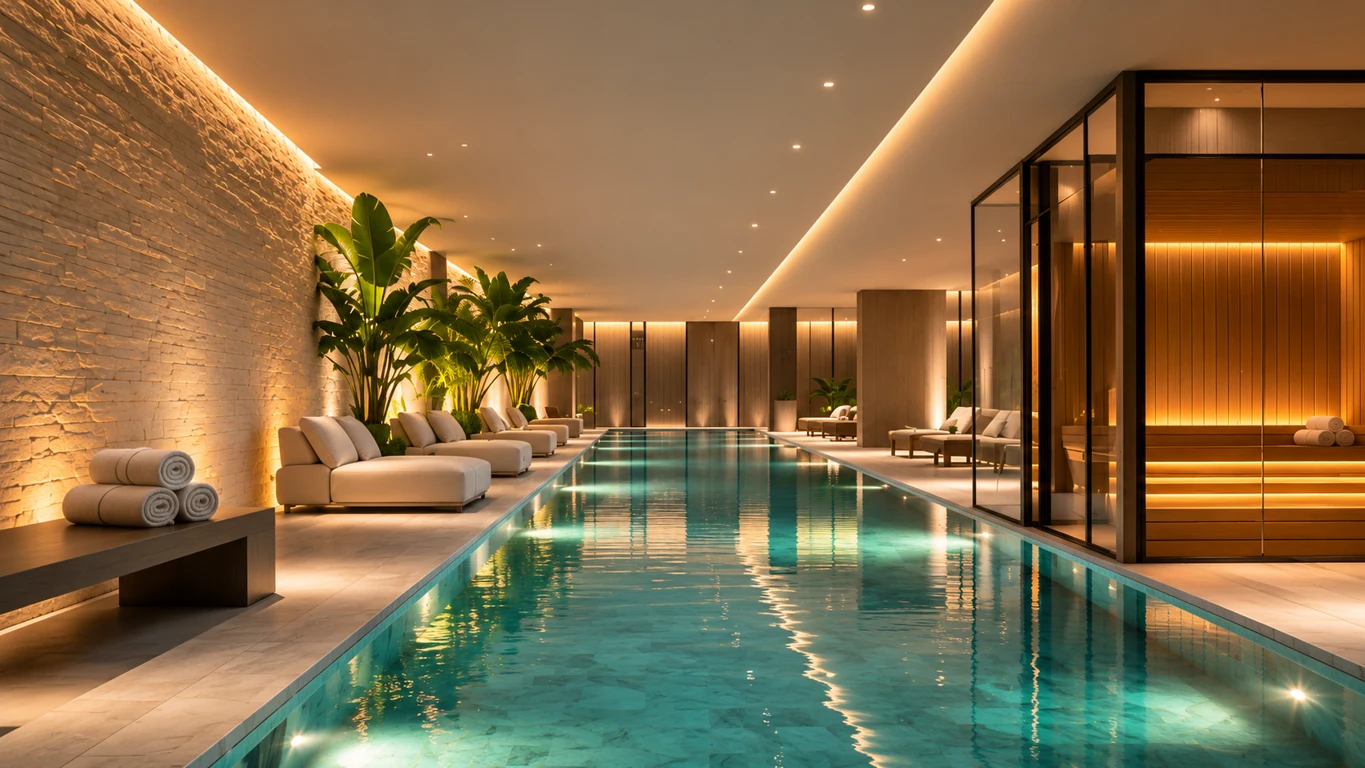
The official project website describes a planned $25 million longevity centre, alongside a Nobu Spa, fitness and movement spaces, personal training, Pilates and yoga, recovery environments and an on-site wellness concierge.[1][2] The list of proposed modalities is unusually extensive.
It ranges from cryotherapy, hyperbaric oxygen, red-light and infrared therapies to compression, PEMF, IV and peptide services, ozone therapy, thermal experiences and different recovery and meditation environments. The separate movement programme includes strength and HIIT training, Pilates equipment, physical therapy, sports recovery and yoga.[2] It is an impressive programme. But there are already developments around the world with spectacular spas, longevity clinics and sophisticated biohacking equipment. That alone is not what makes this project a useful wellness real estate benchmark.
02 · 619 Brickell
The question I was more interested in
When I look at a development from a wellness real estate perspective, I increasingly ask a different question:
“What is the building doing for the resident when they are not using the wellness amenities?”
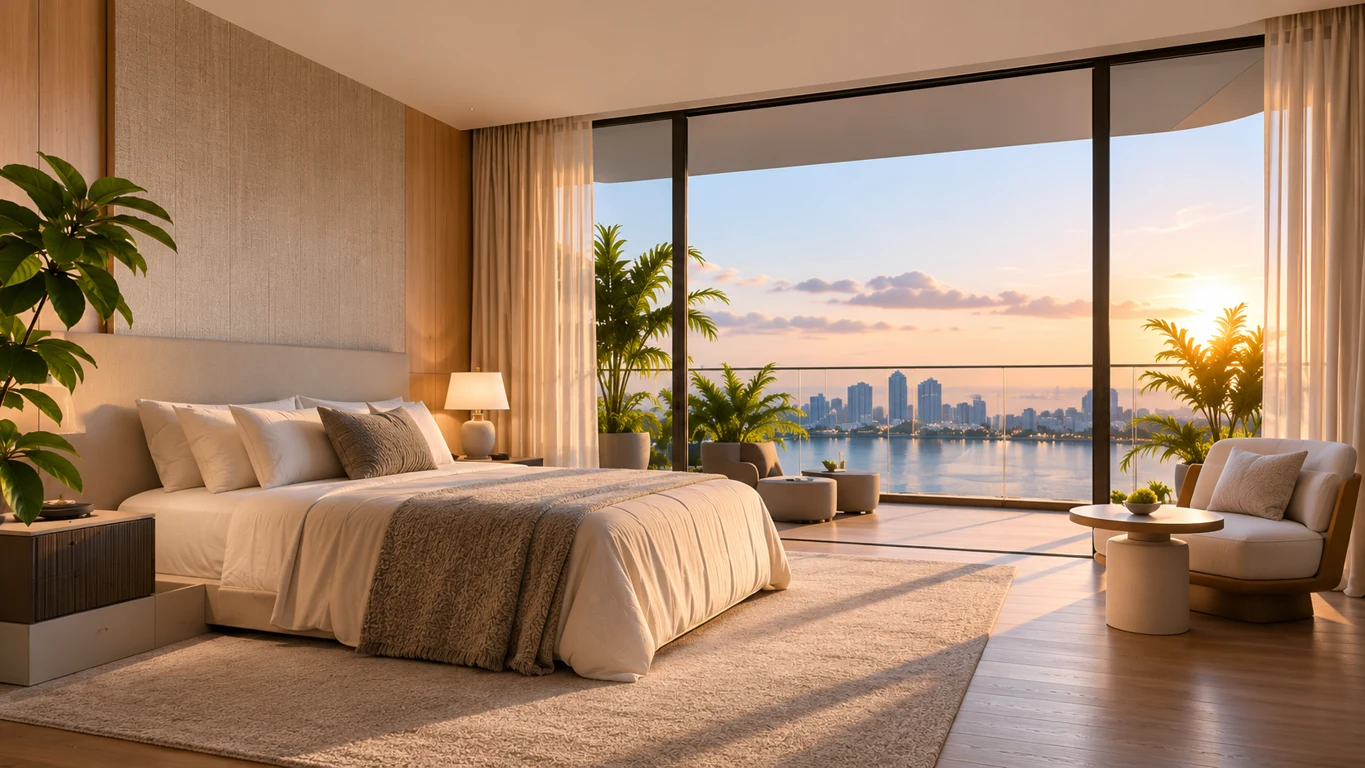
A resident may spend an hour in the gym. Perhaps another hour having a treatment. But they may spend eight hours sleeping in their bedroom. They breathe the indoor air continuously. They drink and cook with the water. They live with the artificial lighting, temperature, humidity, acoustics and materials around them every day. That is where the built environment has its most constant relationship with the person living inside it. So I went deeper into the residential specifications of 619 Brickell. And this is where the project started to stand out.
03 · The residence
Wellness crosses the threshold into the home
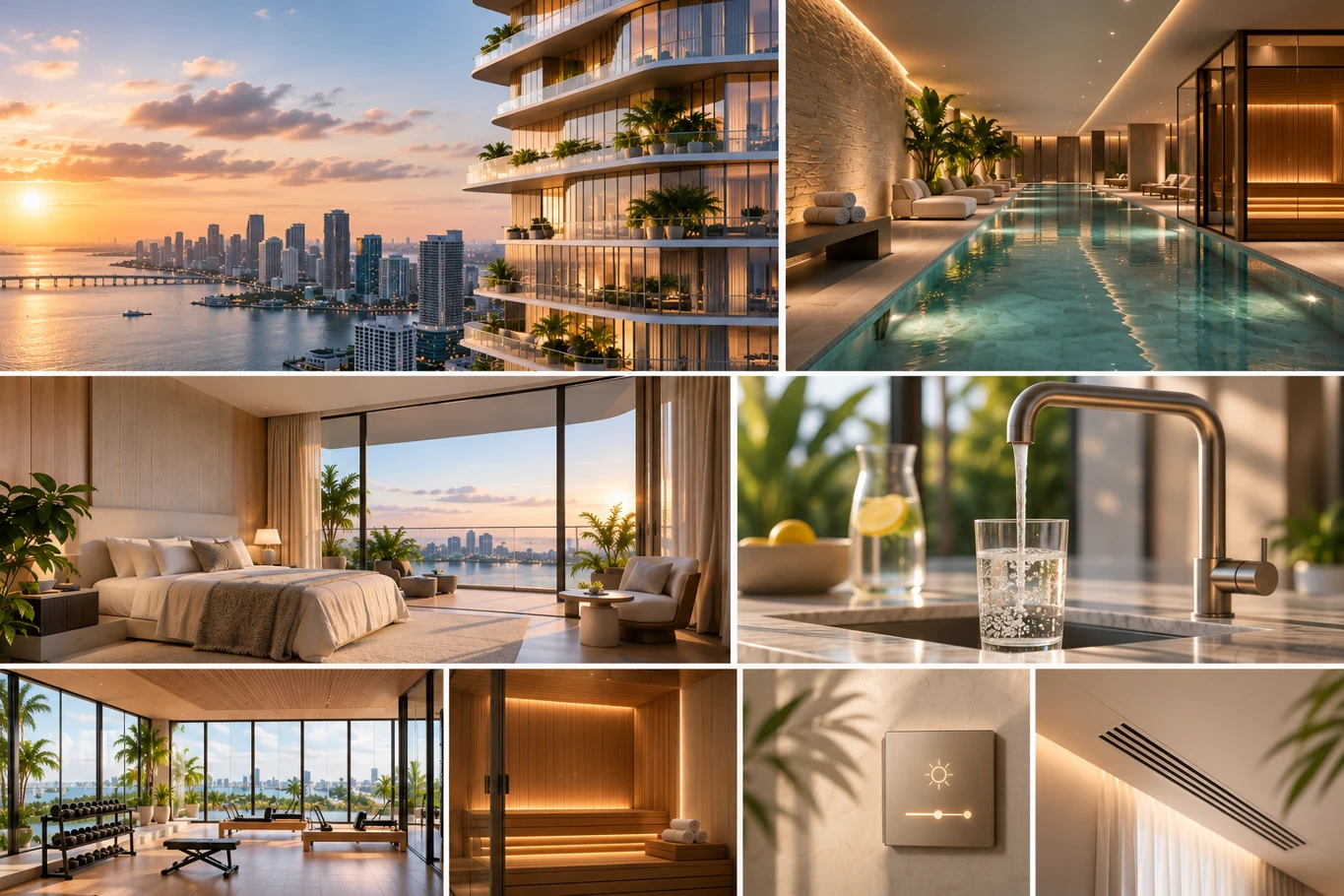
According to the project's current property brochure, the residences are planned with a surprisingly substantial layer of health-oriented building infrastructure.[5] The specification includes:
Wellness inside the residence · Proposed specification [5]
- Air
- HEPA air purification
- Water
- Multi-stage reverse-osmosis filtration in the kitchen · Gaggenau appliances with integrated water filtration
- Climate
- Smart climate & humidity control
- Light
- Lutron RadioRA 3 smart lighting controls
- Electrical environment
- MC cable specified for a low-EMF environment
- Air distribution
- Discreet linear air diffusers in living spaces and primary bedrooms
- Home technology
- Smart home automation
- Materiality
- Natural materials · Strong indoor–outdoor relationship
- Private wellness
- Sauna in selected residences
This is the part I find genuinely important. Because suddenly we are no longer talking only about wellness as somewhere a resident goes. We are talking about air, water, light, humidity, thermal comfort and the everyday residential environment. And that changes the conversation. The project itself describes the residences as environments intended to encourage tranquillity and wellbeing through natural materials, treated glass, tactile fabrics and considered lighting.[5] I would also be careful not to overstate some of these features.
For example, the brochure specifies Lutron smart lighting controls. That is valuable, but on the evidence currently available I would not automatically describe it as a full circadian-lighting system. Likewise, the documented water strategy I can verify is multi-stage reverse osmosis and integrated filtration rather than some of the broader claims appearing on third-party sales sites.[5] For me, that distinction matters. Wellness real estate needs evidence, not just wellness vocabulary.
04 · 619 Brickell
The home itself becomes part of the wellness ecosystem
This is where I think 619 Brickell offers a useful lesson for branded residences more broadly. The project effectively works across several layers. There is the architecture: natural light, panoramic water views, extensive glazing, terraces and a strong relationship with the outdoors. There is the residential infrastructure: air purification, water treatment, humidity and climate management, lighting controls and home technology. There is movement and recovery: fitness, Pilates, yoga, physical therapy, hot and cold experiences and recovery modalities. There is the dedicated longevity programme.
And finally there is hospitality: concierge, housekeeping, in-residence dining, lifestyle management and the wider Nobu service ecosystem. The project brochure lists services ranging from hotel-style housekeeping and in-residence staff support to a dedicated lifestyle manager and wellness concierge.[2][5] These layers do different things. Together, however, they begin to create something closer to a residential wellness ecosystem. That is much more interesting to me than simply counting the number of treatment rooms.
The residential wellness ecosystem
- 01
Architecture
Natural light · Water views · Terraces · Indoor–outdoor connection · Materials
- 02
Residential infrastructure
Air · Water · Light · Climate · Humidity · Electrical environment · Technology
- 03
Movement & recovery
Fitness · Pilates · Yoga · Physical therapy · Hot & cold · Recovery modalities
- 04
Longevity services
Cryotherapy · Hyperbaric oxygen · Red light · Infrared · Compression · Wellness concierge
- 05
Hospitality
Concierge · Housekeeping · In-residence dining · Lifestyle management · Service
Everyday wellbeing
05 · 619 Brickell
Architecture comes before biohacking
There is another part of the project that should not get lost behind the technology. Foster + Partners designed the tower as five vertically stacked residential collections, with the upper sections progressively rotated toward Biscayne Bay. According to the architects' project description, that geometry was developed to maximise sunlight and water views for the homes.[3] The official project language repeatedly refers to light, air, water and sky as part of the residential experience. I find this important because the wellness real estate conversation can easily become obsessed with devices.
More technology does not automatically create a healthier home. A hyperbaric chamber cannot compensate for poor indoor air. A red-light therapy room cannot compensate for a bedroom that does not support rest. A beautiful spa does not solve poor acoustics, uncomfortable temperatures or inappropriate lighting inside the residence. The best wellness real estate begins much earlier — with architecture, engineering and the design brief — and then technology can enhance it. That is also why these decisions need to happen early in development.
Air systems, water infrastructure, lighting, acoustics, material specifications and environmental controls are much harder to add intelligently once the building has already been designed.
06 · 619 Brickell
Convenience may be one of the real luxuries
Arnaud Karsenti, Managing Principal of developer 13th Floor Investments, made an interesting point when discussing the wellness programme.[6] Activities that normally require appointments, travel and scheduling are being integrated into daily life inside the building.[6] That sounds simple, but I think there is something important behind it. Luxury has traditionally been associated with access. Wellness-oriented luxury may increasingly also be about reducing friction.
Can I train without travelling across the city?
Can I recover close to home?
Can I access expertise easily?
Can my home environment quietly support good sleep, comfortable humidity, cleaner air and better water without requiring me to think about it every day?
In that sense, the most sophisticated technology may eventually be the technology residents notice the least.
It simply works in the background.
07 · Independent perspective
A benchmark — not a blueprint
I would not present 619 Brickell as proof that every wellness technology included in the project should become standard in luxury housing. Nor do I think every branded residence needs cryotherapy, IV therapy, peptides or hyperbaric oxygen. Different buyers, locations and brands require very different solutions. And importantly, the project's own legal disclosure makes clear that the wellness equipment is intended for general wellness and recreational purposes, not to diagnose, treat, cure or prevent medical conditions, and that potential health or longevity benefits are not guaranteed.[5]
That distinction is important, particularly as the word longevity becomes more commercially attractive.
“A credible wellness real estate strategy should not depend on making medical promises.”
What I take from 619 Brickell is something more fundamental:
the wellness thinking continues beyond the amenity floor. That is what makes it a benchmark for me.
08 · 619 Brickell
And this matters particularly for branded residences
I recently wrote about the rapid expansion of branded residences in my previous analysis of branded residences and a question I find increasingly interesting:
How should someone live differently because this particular brand created their home? 619 Brickell gives us one possible answer. Nobu brings hospitality, service and a philosophy influenced by Japanese ritual and simplicity. Foster + Partners brings architecture and engineering. The wider development team brings residential, interior and operational expertise. The official team also includes 13th Floor Investments and Key International on the development side, Sieger Suarez Architects, Studio Munge and DesignAgency, alongside Key Sales and ONE Sotheby's International Realty.[4] That multidisciplinary structure matters.
Because a successful wellness residence is unlikely to be created by one consultant adding a list of products at the end. It is the result of decisions made across architecture, building services, interiors, operations, technology and resident experience. This becomes even more relevant as more automotive, fashion, design and lifestyle brands enter residential real estate. A beautiful brand identity may create desire. A spectacular spa may help sell the brochure.
09 · 619 Brickell
Wellness cannot stop at the spa
This is probably the biggest takeaway for me. If a development wants to position itself seriously around wellness or longevity, the conversation should not stop with:
How large is the spa? It should continue with:
What air will people breathe?
What water will they drink?
What happens to light after sunset?
How are temperature and humidity managed?
What materials surround them?
How does the bedroom support rest?
How does technology disappear into daily life rather than dominate it?
How do movement, recovery, nutrition and hospitality connect?
And most importantly:
“What happens when the resident closes the door of their own home?”
That is where wellness real estate becomes real estate. Not an amenity package attached to it.
10 · 619 Brickell
From amenity to infrastructure
619 Brickell is still a pre-construction development, and like all projects at this stage, specifications and amenities may evolve. The project's own offering materials explicitly reserve the developer's right to modify proposed features, services and designs.[5] So I am looking at it as a current development concept, not as a completed building whose performance can already be measured. But even at this stage, it provides an interesting benchmark. The $25 million longevity centre is the headline. The extensive wellness menu is what photographs well. For me, however, the more important part is much quieter:
HEPA filtration. Water treatment. Climate and humidity control. Lighting. Materials. Building systems. Those are not always the features that make the Instagram advertisement. But they are much closer to what I believe the next generation of wellness real estate needs to be about. Because the future of wellness-led residential development is not simply about creating extraordinary places where residents can go to be well. It is about creating homes that quietly support how people live, recover and perform every day. And that is why 619 Brickell is a project I will be watching.
Sources & project material
- [1]619 Brickell — Official FAQ
- [2]619 Brickell — Official Amenities & Services
- [3]619 Brickell — Official Vision / Foster + Partners architecture information
- [4]619 Brickell — Official Team
- [5]619 Brickell Property Brochure, July 2026
- [6]Homes.com News · 21 May 2026 — “Nobu-branded 619 Brickell condo in Miami plans $25 million wellness investment”
Project information reflects currently published pre-construction materials as of November 2026 and may change during development.
Related Insights
Branded Residences · Wellness Real Estate